Registry & Celebrations
The Baby Registry Checklist: Everything You Actually Need
A category-by-category guide to what to put on your baby registry — with must-have quantities, honest skips, and safety-conscious picks grounded in real research.
Clinically reviewed · June 2026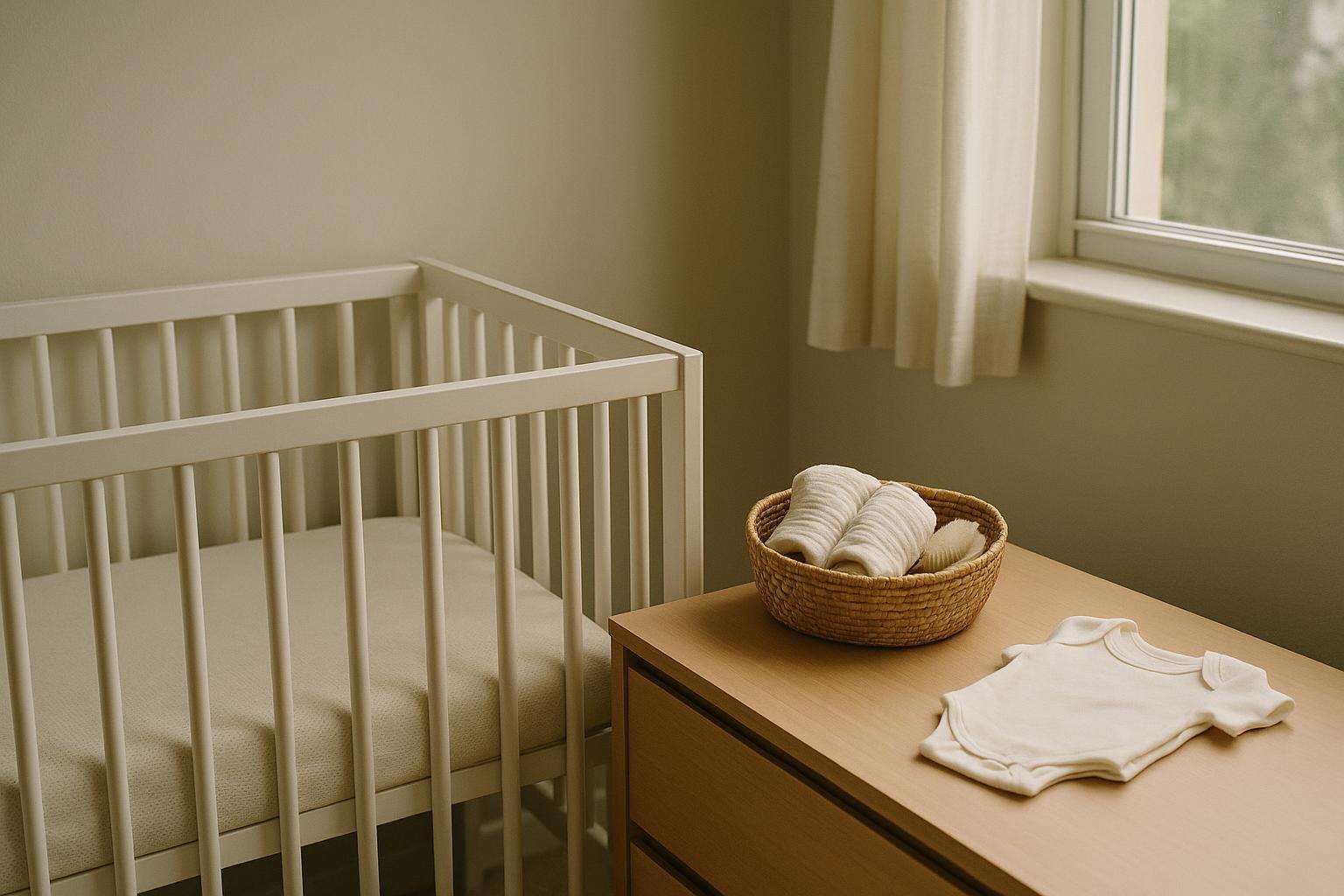
A complete baby registry covers six core categories — sleep, travel, feeding, diapering, bathing, and clothing — with a handful of must-haves in each. Most families need 50–80 items total. Prioritize safety-critical pieces (car seat, crib mattress) for quality and certifications, then save aggressively on short-use clothing and novelty items.
Building a baby registry feels exciting and overwhelming in equal measure. The sheer number of products marketed to expecting parents — many claiming to be essential — makes it genuinely difficult to distinguish the things you will reach for every day from the items that will collect dust before the baby's first month is over. This guide cuts through the noise with a category-by-category checklist grounded in real safety research, CPSC guidance, and the honest experience of parents who have been there.
This guide is general information, not medical advice. Discuss any health or safety questions specific to your baby with your pediatrician or care provider.
What Are the Non-Negotiable Items Every Baby Registry Needs?
Before you scan a single item, it helps to understand the framework. Baby gear falls into two tiers: safety-critical items where quality and certification matter, and convenience items where you can save aggressively. The U.S. Consumer Product Safety Commission regulates both, but the safety stakes are not equal across categories. Here is the core must-have list, organized by category.
Sleep
- Crib or bassinet (1). For a crib, any model manufactured after June 2011 meets CPSC's reinforced safety standards banning drop-side rails and mandating slat spacing of no more than 2‑3/8 inches. The IKEA SNIGLAR (~$120) is a long-standing safety-focused budget pick; it converts to a toddler bed and meets all current standards. Never use a crib made before June 2011 regardless of appearance.
- Crib mattress (1). This is the single highest-priority chemical-safety item on your registry. Research published in Environmental Science and Technology by Dr. Miriam Diamond's team at the University of Toronto found up to 21 harmful chemicals — including phthalates, organophosphate flame retardants, and hormone-disrupting UV-filter compounds — in children's breathing zones during sleep, with emissions spiking under body heat and pressure. Look for GOTS certified (prohibits chemical flame retardants and polyurethane foam throughout the mattress), OEKO-TEX Standard 100 Class I, or MADE SAFE certification. Budget for $200–$400 more than a conventional mattress — this is the most justified upgrade on the entire list.
- Fitted crib sheets (2–3). Organic cotton, snug fit. You will launder these frequently.
- Swaddle blankets / sleep sacks (3–4). Muslin swaddles for the newborn phase; transition to a sleep sack once rolling begins.
- White noise machine (1, optional but highly recommended). Basic models from Marpac or LectroFan start under $40 and significantly ease sleep transitions.
Travel & Transport
- Infant car seat (1). Every car seat sold in the United States meets the same federal safety standards set by NHTSA — the cheapest compliant seat is structurally as protective as the most expensive. What justifies spending $150–$350 on a well-reviewed model (Chicco KeyFit, Nuna PIPA, Graco SnugRide) is ease of correct installation, harness adjustability, and extended weight range. Never purchase a used car seat: crash damage from even a minor fender-bender is invisible and structurally compromises protection. For chemical safety, Nuna is the only brand with an entire line free of added flame retardant chemicals, using Merino wool and TENCEL lyocell to meet flammability standards naturally; UPPAbaby eliminated PFAS from its 2025 lineup.
- Stroller (1). Match stroller type to your lifestyle. A full-size stroller (Bugaboo Butterfly, UPPAbaby VISTA, Mockingbird Single-to-Double) in the $500–$1,200 range typically outlasts two to three children and retains 50–70% resale value, making cost-per-use competitive with budget models that fail within 18 months. A lightweight option like the Baby Jogger City Mini GT2 (~$350) suits urban parents prioritizing compact fold. Travel systems (car seat + stroller combo adapter) simplify the newborn phase.
- Baby carrier or wrap (1). The Ergobaby Omni Deluxe (~$219) supports newborn positioning certified by the International Hip Dysplasia Institute and extends use to 48 months. A stretchy wrap (Solly Baby, ~$70) is gentler for the immediate newborn stage. Having at least one hands-free option is genuinely transformative in the early weeks.
Feeding
- Nursing bras (2–3) and nursing pads (1 box disposable + 1 set reusable).
- Breast pump (1). Most insurance plans cover a breast pump at no cost under the ACA's preventive services mandate — confirm with your insurer before registering. Hospital-grade multi-user rental is also an option for the early weeks.
- Bottles (4–6) and bottle brush (1). Start with a variety — babies are particular about nipple flow and shape. Newborn nipples flow slowest; do not rush to faster flows.
- Formula (1–2 cans, if not exclusively breastfeeding). Register for a trial supply rather than a large quantity — many babies have preferences.
- Burp cloths (8–10). You will use more of these than you expect. Muslin or terry cloth both work; the quantity matters more than the brand.
- Boppy or nursing pillow (1).
- High chair (1, add at 3–4 months). The IKEA ANTILOP (~$20) is the pediatric community's longstanding budget recommendation — easy to clean, meets all safety standards, and attaches to most tables.
Diapering
- Diapers (1–2 boxes newborn + 1–2 boxes size 1). Do not over-stock newborn size; many babies bypass it quickly. Diapers and wipes run approximately $86/month for the first year based on BabyCenter 2025 survey data.
- Wipes (2–3 large packs). Unscented, fragrance-free.
- Changing pad + 2 waterproof covers (1).
- Diaper cream (1 tube zinc oxide, 1 tube gentler daily barrier cream).
- Diaper bag (1). Backpack style distributes weight better for long days out.
Bathing & Grooming
- Baby tub with sling or insert (1).
- Hooded towels (2–3) and washcloths (4–6).
- Fragrance-free baby wash and shampoo (1 each). Look for EWG Verified or MADE SAFE certified products.
- Nail file or soft nail scissors (1). Newborn nails grow fast and are sharp.
- Digital thermometer (1, rectal for accuracy in infants).
- Nasal aspirator (1). The Frida Baby NoseFrida is the most widely recommended by pediatricians.
Clothing
Baby clothing is the clearest area to save. Infants advance through three to four clothing sizes in the first twelve months — individual garments are functionally disposable. Focus on quantity and ease of dressing over brand:
- Onesies with snaps at the neck (for pulling over the head) and at the bottom: 6–8 per size, newborn through 6 months
- Footed sleepers: 4–6 per size
- Socks: 6–8 pairs per size (they disappear constantly)
- Hats: 2–3 newborn size
- Seasonal outer layer appropriate to your climate
Skip baby shoes for pre-walkers entirely — they serve no developmental purpose.
Children's sleepwear in sizes 9 months and above must meet federal flammability standards. Snug-fitting sleepwear satisfies these without chemical treatment — this is why snug fit is specified on the label. Loose-fitting infant sleepwear may be treated with flame retardants. Choosing snug-fit options eliminates the need for chemical treatment.
Which Items Are on Every Registry List but Rarely Worth Buying?
The baby product industry is remarkably good at manufacturing the sensation of need. These items appear on most generic registry lists and are rarely used enough to justify the registry space or the gift budget they consume:
- Wipe warmers. Most parents stop using them by week six. Room-temperature wipes are fine.
- Dedicated baby food makers. A standard blender or immersion blender purées equally well.
- Baby shoes (pre-walking). Socks are sufficient and easier to get on and off.
- Nursery décor sets. Matching lamp, wastebasket, and picture frame sets occupy registry space better used for consumables.
- Diaper stackers and changing table organizers. A simple basket works.
- Boutique baby laundry detergent. A fragrance-free, dye-free mainstream option (All Free Clear, Seventh Generation) meets pediatric dermatology guidance and costs far less.
- Baby bath kneeler. A folded towel on the floor beside the tub works equally well.
For an honest look at where to direct budget instead, Ally Financial's baby budgeting guide breaks down category spending by what parents actually report using versus what was returned unused.
How Should You Think About Chemical Safety When Building a Baby Registry?
Chemical safety has moved from a fringe concern to a mainstream one — and the research now supports treating it as a parallel criterion to structural safety, particularly for products that contact your baby during sleep.
Two peer-reviewed studies published in April 2025 in Environmental Science and Technology, conducted by researchers at the University of Toronto including Dr. Miriam Diamond, tested 16 children's foam mattresses and simultaneously sampled air in 25 babies' and children's bedrooms. Mattresses were tested under simulated sleep conditions — body temperature and a 15-pound load — and found up to 21 harmful chemicals in breathing zones, with the highest concentrations directly beside the mattress. Chemicals included phthalates, organophosphate flame retardants (including TCEP, a carcinogen banned in Canada since 2014), and hormone-disrupting UV-filter compounds. Emissions spiked with heat and pressure — the precise conditions a sleeping infant creates — and two mattresses violated Canadian safety regulations despite carrying certification labels.
The same concern applies to car seats and strollers, where conventional foam and fabric commonly contain organophosphate flame retardants and PFAS (“forever chemicals”) applied as water- and stain-resistant coatings. PFAS are persistent compounds linked to immune dysfunction, hormonal disruption, and reduced vaccine effectiveness in children. Nuna is the only brand with an entire product line free of added flame retardant chemicals; UPPAbaby eliminated PFAS from its 2025 lineup.
The Environmental Working Group's Healthy Baby Registry guide identifies specific products across mattresses, car seats, and soft goods that meet overlapping chemical-safety certifications — GOTS, OEKO-TEX Standard 100 Class I, MADE SAFE, and GREENGUARD Gold. Budget-constrained families should prioritize the crib mattress first, where infant exposure is highest and longest, followed by the car seat. A certified organic crib mattress typically costs $200–$400 more than a conventional alternative — a meaningful but bounded upgrade relative to total first-year spending that commonly reaches $20,000–$30,000.
How Do You Maximize Registry Discounts and Platform Benefits?
The standard money-maximizing strategy is to run multiple registries simultaneously. Use Babylist as your public-facing hub — it accepts items from any retailer, offers cash fund contributions via PayPal or Venmo (not store credit), includes a price-comparison tool, and provides a 15% completion discount on Babylist Shop purchases. Note that Babylist's discount excludes certain brands including UPPAbaby, Nuna, and Mockingbird.
Maintain private registries on Amazon (15% completion discount for Prime members, capped at $2,000 in purchases) and Target (15% storewide, usable twice; RedCard holders add an extra 5%) to capture each platform's discount window separately. Even self-purchasing only items you genuinely need through the completion windows can yield $200–$500 in combined savings.
Babylist's Hello Baby Box — a welcome box of sample products — requires adding at least three Babylist Shop items, three external items, completing 40% of the registry checklist, having $30 in Babylist Shop purchases, and paying an $8.95 shipping fee. Amazon unlocks its Welcome Box after someone purchases one item valued at $10 or more. Target's Welcome Kit is available free from the in-store Guest Services desk, though it is frequently out of stock at high-traffic locations.
Frequently asked
How many items should be on a baby registry?
Most registry experts recommend 50–80 items across all categories — enough to give guests meaningful choices at varied price points without padding the list with items you will never use. A Babylist-style universal registry makes size less critical because you can add items from any retailer and guests are not locked into a single store. Aim to include a handful of items under $20, a solid mid-range tier, and a few big-ticket pieces (stroller, car seat, crib) for group gifts or close family. Pregnant Chicken's registry guide recommends completing the list by 26–28 weeks so guests have several weeks before a typical baby shower date to purchase. Trim ruthlessly: if you cannot picture yourself using an item in the first three months, leave it off.
When should I start my baby registry?
The sweet spot is between 12 and 20 weeks — early enough that close family members can begin planning, but late enough that you have had your anatomy scan and a clearer sense of your due date. Most major platforms — Babylist, Amazon, and Target — allow registries to be created at any point in pregnancy and edited indefinitely. Completion discounts from all three platforms activate 60 to 8 weeks before your due date depending on the retailer, so your registry should be reasonably complete by that window. If you are planning a baby shower, the traditional timing is around 28–32 weeks, so aim to have the registry live and shared at least six weeks prior.
What should you never buy secondhand for a baby?
Three categories carry clear safety reasons to buy new only. Car seats should never be purchased used: crash damage — even from a minor fender-bender — is invisible to the eye and structurally compromises protection. Motherly's used-gear safety guide and child passenger safety technicians universally advise against secondhand car seats unless you know the full crash history with certainty. Crib mattresses carry hygiene risks (mold, dust mites) and an unknown chemical history; the Environmental Science and Technology research by Dr. Miriam Diamond's team at the University of Toronto found that mattress off-gassing spikes under body heat and pressure — conditions that intensify over years of use. Cribs manufactured before June 2011 predate CPSC's strengthened safety standards banning drop-side rails; never use one regardless of apparent condition. Breast pumps (unless hospital-grade multi-user devices) should also be purchased new. Everything else — strollers, high chairs, bouncers, swings, clothing — is generally safe secondhand after a recall check at CPSC.gov.
What certifications should I look for on a crib mattress?
Look for overlapping certifications, because no single label covers everything. GOTS (Global Organic Textile Standard) for the finished product prohibits polyurethane foam, chemical flame retardants, and chemical adhesives throughout the entire mattress — not just the cover fabric. OEKO-TEX Standard 100 Class I tests every component against formaldehyde, phthalates, heavy metals, and pesticide residue limits — Class I is the most protective tier, designed specifically for items that contact infant skin. GREENGUARD Gold certifies against airborne chemical emissions but does not screen for flame retardants or PFAS, so it is most useful in combination with GOTS or OEKO-TEX. MADE SAFE and EWG Verified apply broader hazardous-substance screens. The Environmental Working Group's Healthy Baby Registry guide identifies specific mattress models that meet these overlapping standards. Budget-constrained families should prioritize the crib mattress and car seat for certification upgrades before any other category.
Is it worth creating multiple baby registries?
Yes — creating two or three registries simultaneously is the standard money-maximizing strategy. Use Babylist as your public-facing hub (universal add, cash funds via PayPal or Venmo, price comparison) while maintaining private registries on Amazon and Target to capture each platform's completion discount separately. Amazon Prime members get 15% off eligible items; Target allows the 15% discount to be used twice — once online and once in-store — and RedCard holders stack an extra 5%. Even if you self-purchase only items you genuinely need through the completion windows, the combined savings across all three programs can reach $200–$500. Note that Babylist's completion discount excludes certain brands including UPPAbaby, Nuna, and Mockingbird, so those premium gear items are better purchased through Amazon or Target's discount windows.
What baby gear is safe to skip entirely?
Several popular items see little actual use after the first few weeks. Wipe warmers are a common gift that most parents stop using by month two; room-temperature wipes are fine for newborns. Diaper stackers and decorative changing-table accessories add clutter without function. Dedicated baby food makers (like the Baby Bullet) are redundant — a standard blender, food processor, or immersion blender purées baby food equally well. Baby shoes for pre-walkers serve no developmental purpose; socks suffice. Nursery-themed décor sets (matching lamp, waste bin, picture frames) are appealing but occupy registry space better used for consumables. If your budget is tight, skip specialty baby laundry detergent too — a fragrance-free, dye-free detergent like All Free Clear meets pediatric dermatology recommendations and costs a fraction of boutique baby options. Redirect that registry real estate to high-use consumables like extra swaddle blankets, muslin cloths, and nursing pads.