Prenatal Care & Testing
What Is a Chemical Pregnancy? Causes, Signs and Recovery
A chemical pregnancy is a very early pregnancy loss — detected by hCG on a test but ending before a gestational sac is visible on ultrasound. Here is what OB-GYN evidence says about causes, symptoms, trying again, and when to seek care.
Clinically reviewed · June 2026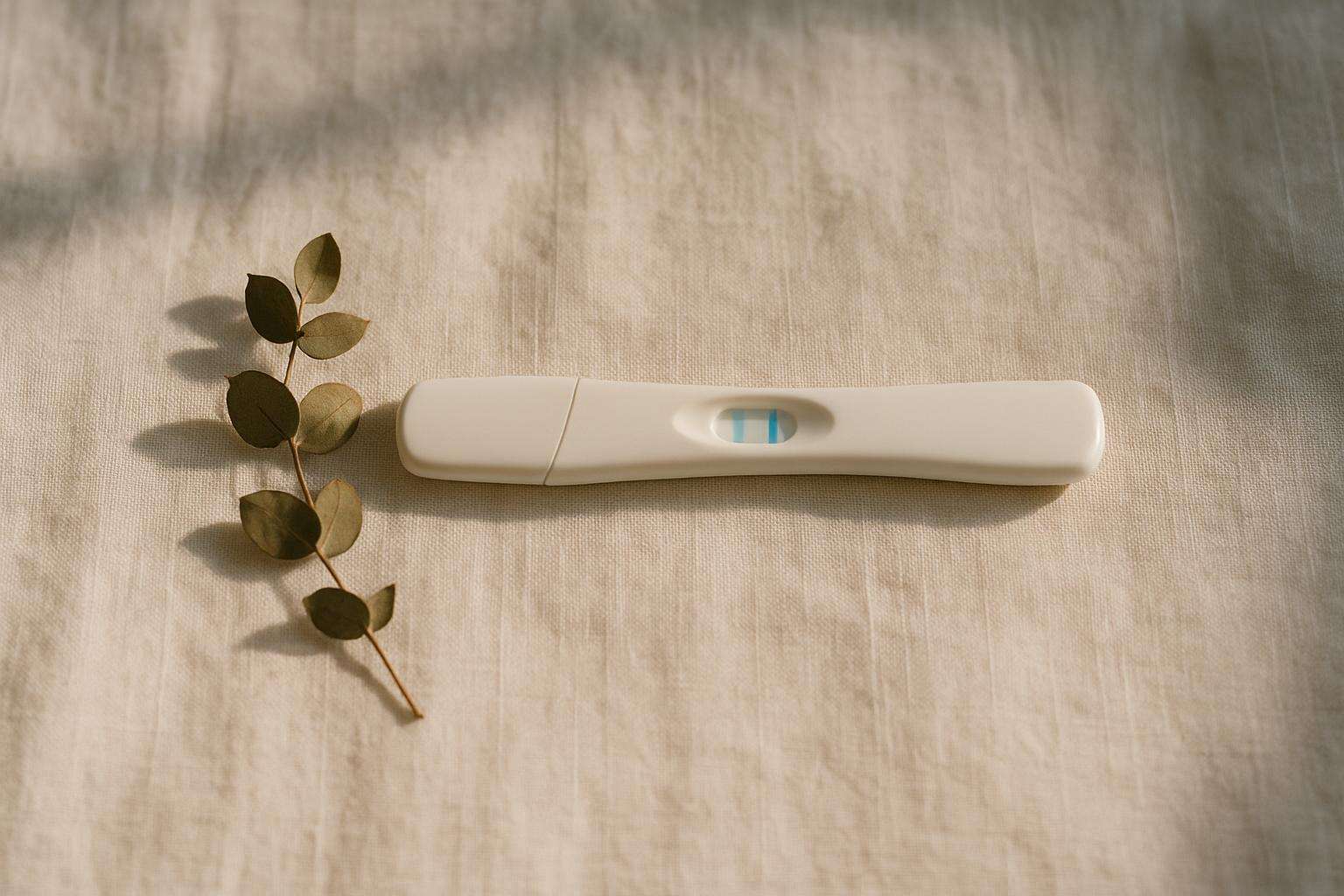
A chemical pregnancy is a very early pregnancy loss that occurs after a home or blood test detects hCG — the pregnancy hormone — but before a gestational sac becomes visible on ultrasound, typically before five to six weeks of gestation. It is real, it is common, and in most cases it does not affect your ability to conceive again.
If you have ever seen a faint positive pregnancy test only to have your period arrive days later, you may have experienced a chemical pregnancy. The term sounds clinical and cold, but it simply describes the stage at which the loss occurred: early enough that pregnancy was confirmed only by the chemistry of hCG in your urine or blood — not yet by ultrasound imaging.
Understanding what a chemical pregnancy is — and what it is not — can make an already confusing experience a little less frightening. This guide walks through the biology, the symptoms, how it compares to a clinical miscarriage, and what the evidence says about trying again.
What Exactly Is a Chemical Pregnancy, and How Does It Happen?
After fertilization, a blastocyst travels down the fallopian tube and implants in the uterine lining, typically between six and twelve days after ovulation — with days eight through ten being most common. Implantation triggers the developing cells to begin secreting human chorionic gonadotropin (hCG) into the mother's circulation. That hCG is what home pregnancy tests detect.
In a chemical pregnancy, the embryo implants — which is why hCG rises enough to produce a positive test — but then stops developing shortly afterward. The placenta does not establish, hCG levels fall rather than doubling as expected, and the uterine lining sheds, causing bleeding that may resemble a normal period or arrive slightly later than expected.
The defining boundary: a chemical pregnancy ends before a gestational sac is visible on ultrasound, which typically becomes detectable around five to six weeks of gestational age. Before highly sensitive home tests became widely available, most chemical pregnancies went undetected entirely — the period arrived a few days late and no one was the wiser. First Response Early Result (FRER), which detects hCG at below 6.3 mIU/mL, can now confirm a pregnancy as early as six days before a missed period, meaning women who test early can catch pregnancies that would once have been invisible.
What Are the Symptoms — and How Do They Differ from a Clinical Miscarriage?
Many chemical pregnancies produce minimal or no symptoms beyond a positive test followed by bleeding. Some women notice:
- A positive pregnancy test — often faint, reflecting the early, still-rising hCG level
- Light cramping — similar to menstrual cramps as the uterine lining begins to shed
- Bleeding that starts within a few days to two weeks of the positive test, resembling a period or slightly heavier flow
- Disappearing pregnancy symptoms — if early breast tenderness or nausea was present, it resolves quickly
- A subsequent negative test — because hCG drops as the pregnancy ends
A clinical miscarriage, by contrast, occurs after a pregnancy has been confirmed by ultrasound — meaning a gestational sac, and often a fetal pole and cardiac activity, have been seen. Clinical miscarriages typically produce more pronounced bleeding, stronger cramping, and sometimes the passage of identifiable tissue. They often require more medical follow-up to confirm the uterus has fully cleared.
Contact your provider or go to the emergency room if you experience heavy bleeding (soaking more than one pad per hour), severe one-sided abdominal pain, fever above 38°C (100.4°F), shoulder-tip pain, or fainting. These can signal an ectopic pregnancy — a separate, potentially life-threatening condition that requires urgent evaluation regardless of what a home test shows.
It is worth noting that roughly 1% of ectopic pregnancies can initially present with a negative or weakly positive test, and that hCG levels in an ectopic implantation may rise more slowly than in a normal intrauterine pregnancy. If you have a positive test, one-sided pelvic pain, and any vaginal bleeding — even light spotting — see a clinician promptly rather than waiting to see how things develop.
What Causes a Chemical Pregnancy?
The most common cause is a chromosomal abnormality in the embryo — the same underlying biology that drives the majority of all first-trimester losses. A landmark 2024 study published in MDPI Cells analyzed 7,118 miscarriage specimens and found chromosomal defects in 67.25% of all cases, with the rate rising steeply with maternal age: by age 44, 94% of lost pregnancies carried chromosomal abnormalities. The most common defects are autosomal trisomies (extra chromosomes), followed by triploidy and monosomy X.
At the chemical-pregnancy stage, the embryo may carry an abnormality that prevents normal implantation or early placental development from proceeding. This is, in the vast majority of cases, a random biological event — not caused by anything the mother did or did not do.
Other contributing factors, which become more clinically relevant in the context of recurrent losses, can include:
- Uterine lining irregularities — fibroids, polyps, or a thin endometrium that impairs implantation
- Thyroid dysfunction — undiagnosed hypothyroidism, particularly TSH above 4.5 mIU/L, is associated with increased miscarriage risk. The American Thyroid Association recommends maintaining TSH at 0.1–2.5 mIU/L in the first trimester.
- Antiphospholipid antibody syndrome — an immune condition that promotes abnormal clotting and is associated with recurrent pregnancy loss
- Progesterone insufficiency — progesterone is essential for implantation and for maintaining early pregnancy. A 2024 scoping review in Children (MDPI), covering 23 studies and 35,862 participants, found a significant positive association between progesterone deficiency and first-trimester miscarriage in all 23 included studies
A single chemical pregnancy rarely warrants a full investigation. ACOG recommends evaluation for recurrent pregnancy loss — including chromosomal, uterine, hormonal, and immunological workup — after two or more consecutive losses, or sooner in women over 35 or with other risk factors.
How Common Is a Chemical Pregnancy?
Chemical pregnancies account for a significant share of all early pregnancy losses. March of Dimes estimates that approximately 10–20% of clinically recognized pregnancies end in miscarriage, and when very early losses — including chemical pregnancies — are included, the total figure may exceed 30%. Because so many chemical pregnancies occurred before the era of highly sensitive home tests, the true historical prevalence has always been difficult to measure.
What is clear: experiencing a chemical pregnancy places you within the normal range of human reproductive biology. It is not a sign that something is fundamentally wrong with your fertility.
Trying Again: What the Evidence Says
The overwhelming evidence supports optimism. Population data consistently show that roughly 80% of women who experience a first-trimester loss go on to have a successful subsequent pregnancy. For women who experience a single chemical pregnancy, there is no established benefit to waiting multiple cycles before trying again — most OB-GYNs advise trying as soon as you feel physically and emotionally ready, which may be as soon as the next cycle.
Ovulation can return as early as two weeks after a pregnancy loss, and a regular menstrual cycle typically follows within four to six weeks. If your provider suspects an underlying issue — such as low progesterone, thyroid dysfunction, or a uterine structural concern — it is sensible to wait for results and address anything correctable before your next cycle. But absent specific findings, there is no medical basis for a waiting period.
A few evidence-informed steps worth discussing with your provider before or during your next conception attempt:
- Request a full thyroid panel — TSH, free T4, and thyroid peroxidase antibodies (TPOAb). The standard TSH reference range is wider than the first-trimester target of 0.1–2.5 mIU/L, so a value reported as "normal" may still be suboptimal for early pregnancy.
- Confirm adequate folate status — neural tube closure occurs in the first 28 days of embryonic life, often before most women know they are pregnant. Starting a prenatal vitamin with methylfolate (5-MTHF) before conception is the most protective approach.
- Consider a luteal-phase progesterone draw if you have had two or more losses or have symptoms of a short luteal phase (spotting before your period, cycles shorter than 24–26 days). Low progesterone in the luteal phase is a modifiable risk factor.
This article provides general health information only and is not a substitute for individualized medical advice. Pregnancy loss is a clinical topic where your specific history, test results, and circumstances matter greatly. Please discuss any concerns about past or future pregnancies with your OB-GYN, midwife, or reproductive endocrinologist.
Frequently asked
How do I know if I had a chemical pregnancy or just a late period?
The key distinction is a positive pregnancy test. A chemical pregnancy produces detectable hCG — so a home pregnancy test registers positive before the loss occurs. If bleeding then arrives a few days to a week or two after that positive result, a chemical pregnancy is the likely explanation. A late period without a prior positive test is simply a delayed cycle — no pregnancy loss involved. Because highly sensitive tests like First Response Early Result (FRER) can detect hCG as low as 6.3 mIU/mL, women who test very early may catch pregnancies that would previously have gone completely undetected and passed as a normal, if slightly late, period. If you are unsure, a repeat test or a serum hCG draw at your provider's office can clarify things quickly.
What causes a chemical pregnancy?
The most common cause by far is a chromosomal abnormality in the embryo — the same underlying biology that drives the majority of all first-trimester losses. A landmark 2024 study of 7,118 miscarriage specimens found chromosomal defects in 67% of cases overall, and the abnormality rate climbed with maternal age, reaching 94% at age 44. At the chemical-pregnancy stage, the embryo often fails to implant securely or ceases development within days of implantation, triggering a natural drop in hCG. Other contributing factors can include uterine lining irregularities, undiagnosed thyroid dysfunction (particularly TSH above 4.5 mIU/L), antiphospholipid antibodies, and, in some functional medicine frameworks, progesterone insufficiency in the luteal phase. A single chemical pregnancy rarely warrants investigation; recurrent losses do.
Is a chemical pregnancy the same as a miscarriage?
Yes and no — it depends on how you define "miscarriage." Clinically, March of Dimes and ACOG define miscarriage as the loss of a pregnancy before 20 weeks. A chemical pregnancy falls within that definition. The distinction often made is between a chemical pregnancy (loss before a gestational sac is seen on ultrasound, typically before five to six weeks of gestation) and a clinical miscarriage (loss after ultrasound confirmation of an intrauterine pregnancy). Both are genuine pregnancy losses. Emotionally, many people grieve a chemical pregnancy just as deeply as a later loss, and that experience is entirely valid. Medically, a chemical pregnancy alone does not trigger the recurrent-loss workup that two or more clinical miscarriages would — though that threshold may be lower when losses are accompanied by symptoms that suggest an underlying condition.
When can I try to conceive again after a chemical pregnancy?
Most OB-GYNs and midwives advise that you can begin trying again as soon as you feel physically and emotionally ready — often meaning the very next cycle. March of Dimes notes that ovulation can return as early as two weeks after a pregnancy loss, so a regular menstrual cycle may follow within four to six weeks. There is no medical evidence that waiting several cycles before trying again improves outcomes. The one practical exception: if your provider is investigating an underlying cause (such as thyroid status or progesterone levels), it makes sense to wait until those results are back and any correctable issue is addressed. This is general information — discuss the timing that is right for your specific health history with your own provider.
Will a chemical pregnancy affect my chances of a healthy pregnancy next time?
For most people, no. A single chemical pregnancy is not associated with reduced future fertility and does not meaningfully increase the risk of a subsequent loss. Population data show that roughly 80% of women who experience a first-trimester loss go on to have a successful next pregnancy. The baseline miscarriage rate for all pregnancies is estimated at 10–20% for clinically recognized losses, and chemical pregnancies — which are often chromosomally driven, random events — sit within that normal biological range. If you experience two or more consecutive losses, ACOG recommends evaluation for uterine, hormonal, immunological, and chromosomal factors. Talk to your OB-GYN if you are concerned; they can review your full history and determine whether any investigation is warranted.
Can progesterone supplementation prevent a chemical pregnancy?
Possibly, in a subset of cases. A 2024 scoping review published in Children (MDPI) — analyzing 23 studies with 35,862 participants — found that progesterone deficiency was significantly associated with first-trimester miscarriage in every included study. When progesterone insufficiency is the underlying driver, supplementation with vaginal micronized progesterone (such as Prometrium or Utrogestan) may reduce loss risk. Current NICE guidance recommends vaginal micronized progesterone 400 mg twice daily for women with early pregnancy bleeding who have had a previous loss. However, if the loss is caused by a random chromosomal abnormality — the most common scenario — progesterone supplementation would not change the outcome. Testing serum progesterone (a luteal-phase draw or early first-trimester level) before supplementing, under the guidance of a provider, is the appropriate starting point rather than supplementing without evidence of deficiency. Do not start or stop any hormone treatment without medical supervision.