Nutrition & Supplements
Iron in Pregnancy: How Much, Which Form and When to Test
Iron needs nearly double during pregnancy, yet most women fall short. Here is what the research says about ferrous sulfate vs. bisglycinate, the food-first heme hierarchy, and when to test ferritin — not just hemoglobin.
Clinically reviewed · June 2026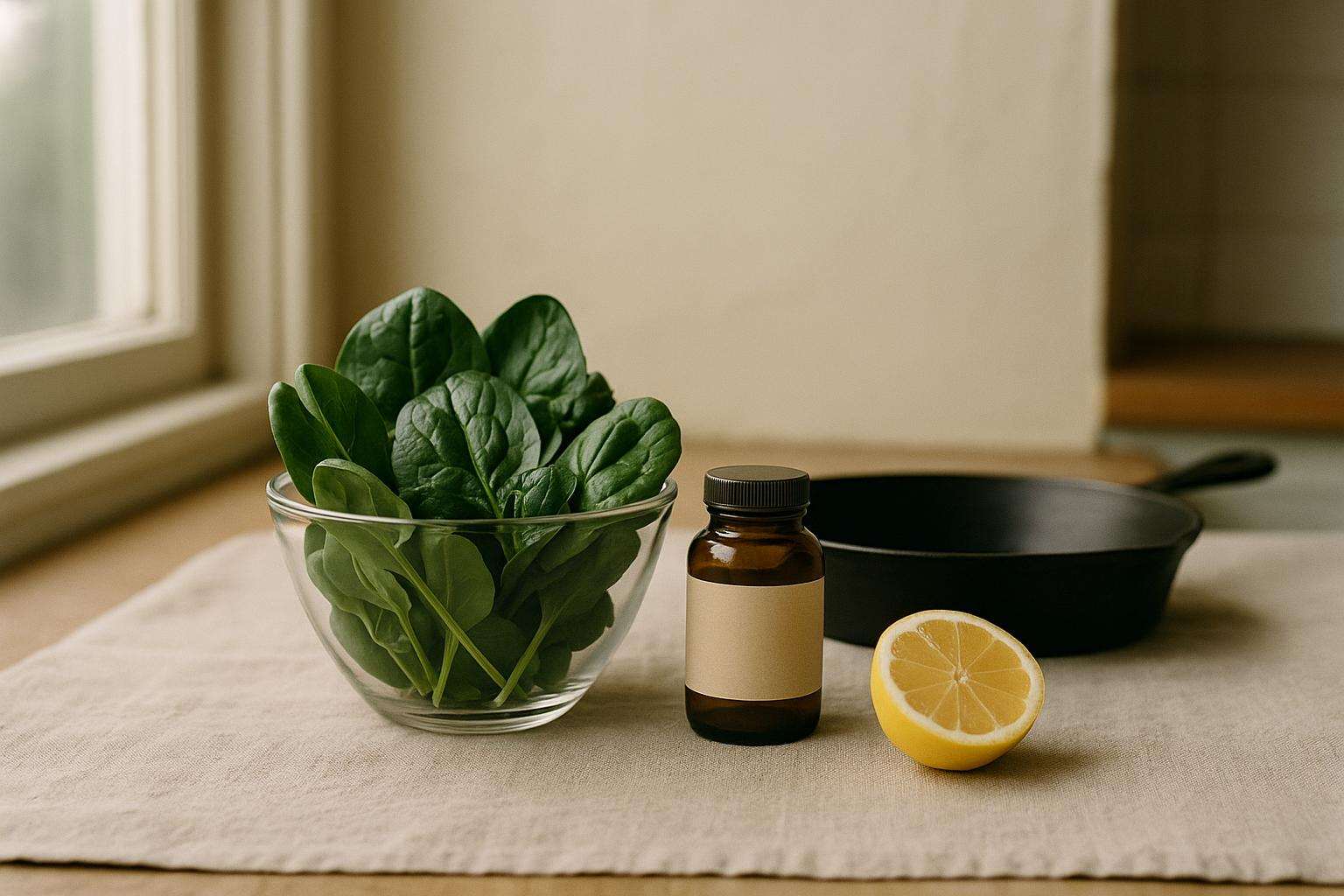
Iron needs jump from 18 mg to 27 mg per day during pregnancy, and an estimated 52.9% of pregnant U.S. women are iron deficient. The gentler chelated form — iron bisglycinate — prevents deficiency as effectively as ferrous sulfate at lower doses and with fewer GI side effects. Testing ferritin, not just hemoglobin, catches depletion months earlier.
Iron is the nutrient most likely to fall short during pregnancy — and the consequences of that shortfall are real. Iron deficiency anemia in pregnancy is linked to preterm delivery, low birth weight, and postpartum depression. Yet the dose, form, and timing of iron supplementation are far from one-size-fits-all, and the standard hemoglobin test that most women receive tells only part of the story.
This guide is grounded in current USPSTF and NIH guidance, real clinical trial data, and the functional nutrition principle that the right approach to iron depends on where you are starting from — not a universal prescription.
This article provides general educational information and is not a substitute for medical advice. Talk to your prenatal care provider about your individual iron status and supplement needs.
Why Does Iron Need Nearly Double During Pregnancy?
Before pregnancy, women require 18 mg of elemental iron per day. During pregnancy that requirement rises to 27 mg per day, according to the National Institutes of Health Office of Dietary Supplements. The World Health Organization sets the bar even higher — 30–60 mg/day — for populations with high anemia prevalence.
The reasons for this surge are physiological and interconnected. Blood volume increases by approximately 40–50% during pregnancy to support placental circulation. The body needs substantially more iron to produce the additional hemoglobin that carries oxygen through that expanded blood supply. Simultaneously, the developing fetus draws iron from maternal stores to build its own reserves — reserves that will sustain the baby for the first six months of life after birth, before solid foods begin.
The timing of depletion follows a predictable arc. A USPSTF-cited analysis found iron deficiency prevalence of 6.9% in the first trimester, rising to 14.3% in the second trimester, and reaching 28.4% by the third trimester. Women who enter pregnancy with low ferritin — after heavy menstrual periods, a plant-based diet, or closely spaced prior pregnancies — are already behind before the increased demands begin.
A 2024 analysis of NHANES data spanning two decades, published in the American Journal of Hematology, found that when ferritin thresholds (rather than hemoglobin alone) were applied, the overall prevalence of iron deficiency among pregnant U.S. participants was 52.9%. That figure underscores how common subclinical depletion is — and how often it goes undetected.
Ferrous Sulfate vs. Iron Bisglycinate: Which Form Is Right for You?
Not all supplemental iron is the same. The form of iron matters for both how effectively it is absorbed and how well you will actually tolerate it day after day — because a supplement you stop taking after two weeks does nothing.
Ferrous sulfate is the traditional prescription standard. A 325 mg tablet supplies approximately 65 mg of elemental iron — more than twice the daily pregnancy RDA in a single dose. It has the longest clinical track record and remains widely prescribed. Its significant drawback is gastrointestinal distress. Nausea, constipation, dark stools, and abdominal cramping are common enough to reduce adherence meaningfully, particularly during a first trimester already dominated by nausea.
Iron bisglycinate is a chelated form where iron is bound to glycine amino acids. Instead of depending on gastric acid for absorption, it enters the body through intestinal amino acid transporters — a pathway that is gentler on the gut and operates efficiently at lower elemental doses. According to Mama's Select, a clinical trial found that 25 mg of iron bisglycinate daily prevented iron deficiency anemia in pregnancy as effectively as 50 mg of ferrous sulfate — and with significantly higher adherence rates. Thorne Iron Bisglycinate (25 mg per capsule, approximately $15–20/month) and FullWell Iron Bump use this chelated formulation.
For women who find ferrous sulfate intolerable, ferrous gluconate is an intermediate option, and liquid iron preparations like Floradix (iron gluconate in a plant-based liquid base) are also frequently cited as easier on the stomach. Vitamin C co-administration — taking iron with a small glass of orange juice or a vitamin C supplement — meaningfully enhances non-heme iron absorption from any supplemental form.
Tea, coffee, and calcium-rich foods (dairy, calcium-fortified foods) all significantly reduce non-heme iron absorption. Take your iron supplement at a different time of day from calcium-containing prenatal vitamins or dairy-heavy meals for maximum benefit.
The Food-First Hierarchy: Heme vs. Non-Heme Iron
Supplementation works best as a complement to a food strategy — not a replacement for one. And when it comes to dietary iron, the single most important concept is the difference between heme and non-heme iron.
Heme iron comes from animal sources and is absorbed at up to 30% — roughly five to ten times more efficiently than plant-based iron. The best pregnancy sources:
- Liver (chicken or beef) — one of the most iron-dense foods available; 3 oz of chicken liver delivers approximately 11 mg of highly absorbable heme iron
- Shellfish — oysters and clams are among the highest iron foods by weight
- Grass-fed beef, bison, and lamb — practical everyday sources at 2–3 mg heme iron per 3 oz serving
- Dark poultry meat — meaningfully higher in iron than white meat
Non-heme iron comes from plant sources and fortified foods. It is absorbed at only 2–10% — but that rate can be nearly doubled with a simple pairing strategy. According to the American Pregnancy Association, combining plant iron sources with vitamin C at the same meal significantly boosts absorption: lemon juice on spinach, tomatoes in a lentil soup, bell peppers in a bean dish, or a small glass of orange juice alongside an iron-fortified cereal. The USDA WIC Works Resource System also highlights this vitamin C pairing as one of the most practical dietary levers for improving iron status.
Top non-heme plant sources include lentils, black beans, chickpeas, pumpkin seeds, dark leafy greens, and iron-fortified whole grains. Cooking in cast-iron cookware modestly increases the iron content of acidic foods like tomato sauce — a small but cumulative contribution.
The practical hierarchy for a food-first approach:
- Prioritize heme iron from animal foods two to three times per week
- Pair non-heme plant iron sources with vitamin C at every iron-rich meal
- Separate tea, coffee, and calcium-rich foods from iron-rich meals by at least one hour
- Consider cast-iron cookware for acidic dishes
- Fill identified gaps with supplementation matched to your ferritin level
When to Test Ferritin — and What the Numbers Mean
Standard prenatal bloodwork checks hemoglobin to screen for anemia. Hemoglobin is a useful but late marker: it reflects iron status only after depletion has been ongoing for some time. By the time hemoglobin falls below the anemia threshold, iron stores may have been depleted for weeks or months.
Ferritin — the storage protein that reflects how much iron the body has in reserve — is a far earlier and more sensitive indicator. The standard laboratory low-normal threshold for ferritin is approximately 12 ng/mL, but functional medicine practitioners commonly recommend a pre-conception or first-trimester ferritin target above 50 ng/mL to provide a meaningful buffer against the increasing demands of the second and third trimesters. The difference matters: a woman entering her third trimester with ferritin at 13 ng/mL has almost no reserve left; a woman at 60 ng/mL has real capacity to meet fetal demand.
The 2024 USPSTF Recommendation Statement on iron deficiency in pregnancy assigned a Grade I (Insufficient Evidence) to both routine screening and routine supplementation in asymptomatic pregnant individuals — meaning the evidence base for universal screening is not yet strong enough for a formal recommendation for or against it. This is not a recommendation against testing or supplementing; it is a signal that individualized clinical judgment is appropriate. The WHO continues to recommend routine daily iron-folic acid supplementation throughout pregnancy.
A practical approach informed by current evidence:
- Ask your provider to include a ferritin measurement at your first prenatal labs
- If ferritin is below 30 ng/mL, begin a targeted iron supplement rather than relying on prenatal vitamins alone
- Recheck ferritin in the second trimester (around 20–24 weeks) to confirm stores are holding
- Women with ferritin well above 50 ng/mL may not need a separate iron supplement beyond what is in a quality prenatal vitamin — higher-dose supplementation in women with adequate stores can contribute unnecessary oxidative burden
A 2024 Cochrane Review confirmed that daily iron-folic acid supplementation in moderately anemic pregnant women improved hemoglobin significantly — from 9.36 g/dL to 12.03 g/dL from early second to early third trimester. The evidence for supplementation improving clinical outcomes (not just lab values) is still being established, which is why knowing your baseline is so valuable: you can supplement to a purpose, not just as a routine.
What Most Prenatal Vitamins Actually Provide — and Where the Gaps Are
Most prenatal vitamins include iron, but the dose and form vary substantially. Gummy prenatal vitamins are a notable exception: because iron reacts with the gummy matrix, causing discoloration and metallic flavor, virtually all gummy prenatals omit iron entirely — making a standalone iron supplement essential for any woman using a gummy prenatal.
Among capsule prenatals, here is what the major brands provide:
| Brand | Iron dose | Iron form | Meets 27 mg RDA? |
|---|---|---|---|
| Ritual Essential Prenatal | 18 mg | Chelated iron | No — 9 mg short |
| Perelel 1st Trimester Pack | 16 mg (Ferrochel chelate) | Iron bisglycinate chelate | No — 11 mg short |
| Nature Made Prenatal + DHA | 27 mg | Ferrous fumarate | Yes |
| Thorne Basic Prenatal | Included (dose varies by lot) | Chelated mineral | Typically yes |
| FullWell Prenatal Multivitamin | None — sold separately as Iron Bump | N/A (must add on) | No — requires add-on |
| Needed Prenatal Multi | None — sold separately | N/A (must add on) | No — requires add-on |
The key takeaway: even among premium prenatal vitamins, iron is either absent or sub-therapeutic relative to the 27 mg RDA. Whether you need to supplement beyond your prenatal depends on your ferritin level — which is exactly why testing matters more than simply assuming your prenatal covers your needs.
If your provider recommends a standalone iron supplement, iron bisglycinate is the form most likely to be well tolerated. Thorne Iron Bisglycinate provides 25 mg per capsule at approximately $15–20 per month. FullWell's Iron Bump is a similarly chelated formulation designed to complement their iron-free prenatal system. For women who prefer a liquid form, Floradix (ferrous gluconate in a plant-based base) is frequently cited by clinicians as gentler than tablet forms, though its iron dose per serving is lower and the product contains added sugars.
Above all: supplement to your labs, not to a label. A woman with ferritin above 60 ng/mL who takes high-dose ferrous sulfate daily is adding unnecessary oxidative load. A woman with ferritin at 10 ng/mL who relies on her 18 mg prenatal alone will struggle through the third trimester. Individual testing is the only way to know where you stand — and to supplement with purpose.
Frequently asked
How much iron do you need during pregnancy?
The recommended dietary allowance (RDA) for iron during pregnancy is 27 mg per day — nearly double the non-pregnant requirement of 18 mg per day, according to the National Institutes of Health Office of Dietary Supplements. The World Health Organization recommends 30–60 mg of elemental iron daily throughout pregnancy in populations with high anemia prevalence. Most standard prenatal vitamins include 18–27 mg of elemental iron, so whether your prenatal alone meets the target depends on the specific product and your individual iron stores measured by ferritin testing. Your provider may recommend a higher dose if your ferritin is low. Talk to your provider before adjusting your iron supplementation dose.
What is the difference between ferrous sulfate and iron bisglycinate?
Both forms deliver elemental iron, but they differ in how the body absorbs them and how the gut tolerates them. Ferrous sulfate (typically 325 mg tablets supplying ~65 mg elemental iron) is the traditional prescription standard and has the longest clinical track record. Its drawback is significant gastrointestinal distress — nausea, constipation, and abdominal pain — that frequently causes women to skip doses. Iron bisglycinate is a chelated form where iron is bound to glycine amino acids; it is absorbed through intestinal amino acid transporters rather than relying on gastric acid, which means it works at lower elemental doses (25–27 mg) with fewer GI side effects. According to Mama's Select, a clinical trial found 25 mg bisglycinate daily prevented iron deficiency anemia as effectively as 50 mg ferrous sulfate, with significantly better adherence. Brands like Thorne Iron Bisglycinate and FullWell Iron Bump use this gentler chelated form.
What are the best iron-rich foods during pregnancy?
Not all iron is equal — the form it comes in changes how much your body absorbs. Heme iron from animal sources is absorbed at up to 30%, making it far more efficient than plant-based iron. The best heme-iron foods are liver (especially chicken or beef liver — one of the most nutrient-dense foods in existence), grass-fed beef, bison, lamb, shellfish (oysters, clams), and dark poultry meat. Non-heme iron from plants — lentils, black beans, spinach, pumpkin seeds, fortified cereals — is absorbed at only 2–10%, but you can nearly double that rate by pairing plant iron sources with a vitamin C food at the same meal (lemon juice on spinach, tomatoes in a lentil stew, bell pepper in beans), per the American Pregnancy Association. Conversely, avoid tea, coffee, and high-calcium foods at the same meal, as they inhibit non-heme iron absorption. Cooking in cast iron also modestly increases food iron content.
Should you test ferritin or just hemoglobin during pregnancy?
Hemoglobin is the standard clinical measure for anemia, but it lags iron depletion by months — your hemoglobin can read normal even when your body's iron stores are already depleted. Ferritin is the storage protein that reflects actual iron reserves and is a far earlier and more sensitive marker of iron deficiency. A 2024 NHANES analysis in the American Journal of Hematology found 52.9% of pregnant U.S. women were iron deficient when ferritin thresholds were applied, compared to a lower figure when hemoglobin alone was used. From a functional medicine standpoint, an optimal pre-pregnancy or first-trimester ferritin target is above 50 ng/mL — not merely above the laboratory low-normal of ~12 ng/mL — to provide a buffer against the sharp iron demands of the second and third trimesters. Ask your provider to include ferritin in your prenatal bloodwork panel.
When does iron deficiency become most common during pregnancy?
Iron deficiency increases across each trimester because fetal and placental demands grow progressively. A USPSTF-cited analysis found iron deficiency prevalence of 6.9% in the first trimester, 14.3% in the second, and 28.4% in the third trimester among U.S. pregnant women, according to the USPSTF 2024 Recommendation Statement. The fetus draws iron from maternal stores to build its own reserves for the first six months of life after birth, so demand peaks in late pregnancy. Women who enter pregnancy with low ferritin — common after heavy menstrual periods, a plant-based diet, or prior closely spaced pregnancies — face a higher risk of progressing to iron deficiency anemia (IDA). IDA in pregnancy is associated with preterm delivery, low birth weight, and postpartum depression. This is general information — your provider is best placed to assess your individual risk.
Can you get enough iron from diet alone during pregnancy?
For most women, diet alone is unlikely to fully meet the 27 mg/day pregnancy RDA. The most efficient iron sources — heme iron from meat and shellfish — need to be eaten regularly, and first-trimester nausea limits intake precisely when demand begins rising. An estimated 83.8% of pregnant women fall below the estimated average requirement for dietary iron, according to the NIH Office of Dietary Supplements, which is why supplementation is widely recommended. That said, a food-first approach remains the foundation: prioritize heme iron foods two to three times per week, pair plant iron sources with vitamin C, avoid inhibitors like tea and calcium at the same meal, and consider cast-iron cookware. Supplementation — at a dose matched to your lab values — fills the gap that diet cannot fully close for most women.