Maternity Style
How to Build a Capsule Maternity Wardrobe by Trimester
A trimester-phased guide to ~12 versatile, neutral-palette pieces that carry you from the first weeks through postpartum nursing — with budget, balanced, and premium options at every step.
Clinically reviewed · June 2026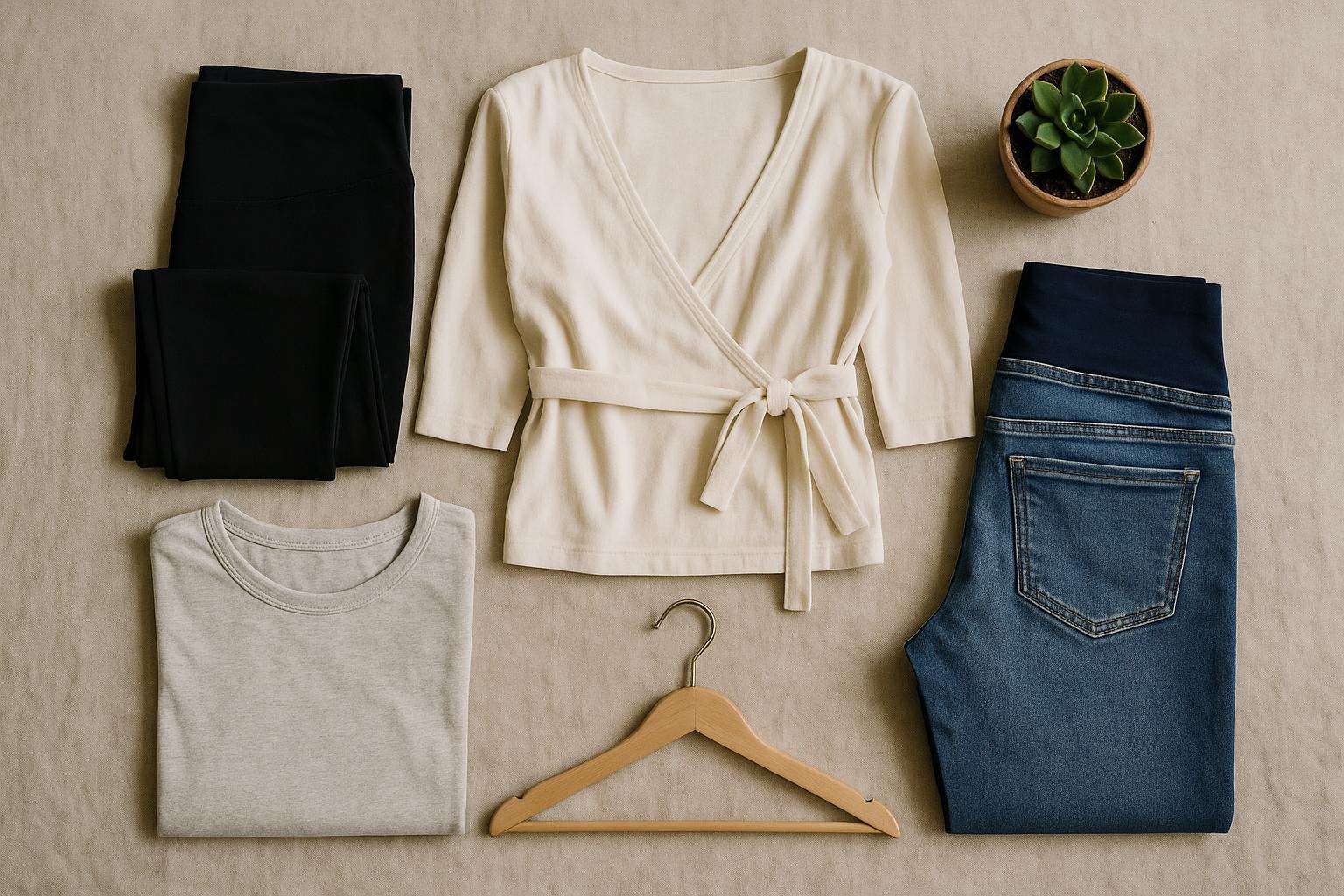
A 12-piece capsule maternity wardrobe — built in three trimester phases around neutral basics that convert to nursing — can take you from the first weeks through postpartum without overspending. Delay most purchases until the second trimester, prioritize dual-use pieces, and plan around a color palette of three or four neutrals.
Maternity dressing has a reputation for being expensive, wasteful, and overwhelming — and it earns that reputation when you buy reactively, piece by piece, without a plan. The alternative is a capsule approach: a small, curated set of pieces that work in combination, grow with your body, and carry forward past delivery. According to Bump Maternity's capsule guide, 10–12 carefully chosen items can generate 25 or more distinct outfits — more than enough variety without the decision fatigue of an overstuffed maternity closet.
This guide phases your purchases trimester by trimester, identifies the pieces with the strongest cost-per-wear math, and gives you honest budget options from $150 to $900 for a complete 12-piece wardrobe.
What do you actually need in each trimester?
Pregnancy is not one body — it is three different bodies in sequence, each with different clothing needs. Buying ahead of your trimester means buying pieces you may not be comfortable in yet; buying late means scrambling during the least comfortable stretch of pregnancy. The solution is a phased purchasing plan.
First trimester (weeks 1–13): extend what you own. Most women do not yet require dedicated maternity sizing. The practical move is to use a belly band — the Ingrid & Isabel Bellaband, approximately $20 at Target, is the category originator — to hold unbuttoned pre-pregnancy jeans in place. Pair it with looser silhouettes already in your closet: flowy tops, wrap dresses, stretchy leggings. The first trimester is not the time for a major maternity wardrobe investment. Your second- and third-trimester body will fit very differently, and most pieces bought at six weeks will be outgrown by week twenty anyway.
Second trimester (weeks 14–27): this is your main purchasing phase. The body changes most rapidly here, and this is when dedicated maternity sizing starts genuinely earning its keep. The core second-trimester additions:
- 1–2 pairs of maternity jeans or pants (full-panel or side-panel depending on fit preference)
- 2–3 neutral maternity tanks and tees — black, white, and gray pair with non-maternity cardigans and outerwear
- 1–2 pairs of maternity leggings for daily comfort
- 1–2 maternity or nursing bras without underwire (nursing bras work through pregnancy because of their comfort and clip-down cup design, extending usefulness postpartum)
Ruched tops are particularly practical in this phase: the side-ruching accommodates growth without the garment looking oversized, and most read as regular fashion rather than obviously maternity.
Third trimester (weeks 28–40): selective additions only. The bump is at full size. Most of your second-trimester purchases are still in rotation. Targeted third-trimester additions typically include: compression socks (obstetric guidelines support these for improving circulation and reducing fluid buildup, which becomes especially relevant in the third trimester), a dedicated occasion dress or stretch dress for warmer weather or events, and possibly a larger nursing bra if significant breast changes have occurred in the final weeks. Investment at this stage is deliberately selective — postpartum body changes again rapidly, and pieces bought at 38 weeks may not fit comfortably at six weeks postpartum.
Which pieces deliver the strongest cost-per-wear math?
The clearest way to evaluate maternity clothing is cost-per-wear rather than sticker price. A $150 pair of jeans worn daily for five months costs under $1 per wear; a $30 pair worn three times before becoming uncomfortable costs $10 per wear.
The highest-ratio pieces are those that work across multiple phases:
Wrap dress ($50–$200 depending on brand). Adjustable tie accommodates a growing bump; the wrap structure opens for nursing without hardware or announcing function. Worn three times per week for ten weeks of pregnancy and twenty weeks of nursing = 90 wears. At $130, that is $1.44 per wear. HATCH Collection is the prestige benchmark — dresses priced $178–$268, with fans reporting continued wear five or more years post-delivery. H&M MAMA and PinkBlush offer wrap-style maternity dresses in the $30–$60 range with a much shorter lifecycle.
Black maternity leggings ($20–$108). At the value end: Old Navy full-panel leggings at roughly $30. At the functional-support end: BLANQI's Everyday Maternity Belly Support Leggings at $42, which integrate a belly support band designed to relieve pelvic and back pressure — a genuine functional benefit in the second and third trimesters. At the premium end: Beyond Yoga's Spacedye Love the Bump Midi Maternity Legging at $108, engineered for yoga and everyday wear with an over-the-belly waistband that folds up or down. Worn three times per week for 20 weeks pregnancy plus 10 weeks postpartum = 90 wears. Cost per wear: $0.33 (Old Navy) → $0.47 (BLANQI) → $1.20 (Beyond Yoga).
Button-front shirt and cardigan. Neither requires a maternity-specific version. A generously-cut button-front in a stretchy fabric accommodates a bump open-buttoned over a tank, then converts to nursing access postpartum. A cardigan layers over any top in every season. Both re-enter the regular wardrobe after delivery.
A piece with strong cost-per-wear math does at least two of these three things: (1) fits from the second trimester through delivery, (2) converts to nursing-friendly use postpartum, (3) works in your regular wardrobe after nursing ends. Pieces that do all three — a good wrap dress, a quality cardigan, black leggings — are your capsule anchors.
What are the best budget options for a complete maternity capsule?
A complete 12-piece capsule is achievable at three distinct budget levels. These figures reflect 2025 retail pricing across brands researched in this guide.
| Tier | Approx. Total | Key Brands | Strategy |
|---|---|---|---|
| Minimal | $150–$250 | Old Navy, H&M MAMA, Isabel Maternity at Target, thrifted | All budget-tier new pieces; belly band delays jeans purchase; secondhand fills occasion needs |
| Balanced | $350–$550 | 1 pair Madewell jeans, BLANQI leggings, Isabel Maternity basics, H&M MAMA tops, Ingrid & Isabel nursing bra | Investment denim + value basics; cost-per-wear math favors quality bottoms and leggings |
| Premium | $600–$900 | HATCH dress, Storq 4-piece capsule bundle, Beyond Yoga leggings, Seraphine jeans | Longevity-focused; most pieces survive postpartum and re-enter regular rotation |
A note on secondhand sourcing: ThredUp, Poshmark, and local consignment can cut the total cost of a premium-brand maternity wardrobe by 40–70%. According to ThredUp's maternity category, brands like HATCH and Seraphine sell at up to 90% off retail on resale platforms — because maternity clothes are worn for such a short window that secondhand condition is often near-new. Buying secondhand for premium items and new for intimate items (nursing bras, base layers) is the most efficient overall approach.
Should you consider fabric safety when choosing maternity clothes?
This question comes up more than most style guides address. Pregnant skin is often more sensitive than usual, and the developing fetus is particularly vulnerable to endocrine-disrupting chemicals (EDCs) during critical developmental windows. A 2021 study published in Environment International was the first to document microplastic particles in human placental tissue — raising legitimate questions about what we wear in prolonged contact with skin during pregnancy.
Research on textile chemicals confirms that phthalates (used in synthetic textile processing) and PFAS (used in stain- and water-resistant fabric finishes) can permeate skin with prolonged contact. For maternity clothing, the practical steps are low-friction:
- Wash new garments before wearing them. A single wash removes residual manufacturing chemicals — dyes, finishing agents, formaldehyde from wrinkle-resistance treatments — that linger on new fabric. This applies to every brand at every price tier.
- Choose natural fibers for base layers and intimate items. Organic cotton, linen, TENCEL™ lyocell, and modal are processed with fewer harsh finishes than polyester-heavy blends. For nursing bras, underwear, and leggings worn all day, natural-fiber or OEKO-TEX certified options are the most defensible choice.
- Look for independent certifications. OEKO-TEX Standard 100 means the finished garment has been tested by an accredited third-party lab for PFAS, azo dyes, BPA, and formaldehyde. GOTS (Global Organic Textile Standard) covers the full supply chain. Brands currently certified include Storq (OEKO-TEX), Boob Design (GOTS + OEKO-TEX), Pact (GOTS organic cotton), and Quince (GOTS and OEKO-TEX).
- Avoid "stain-resistant," "water-resistant," or "wrinkle-free" finishes unless the brand provides a verifiable PFAS-free declaration. These finish claims commonly indicate PFAS treatment or formaldehyde-based agents.
These steps are targeted at items with the most prolonged skin contact — not a reason to avoid the affordable brands that make a practical maternity wardrobe accessible. Old Navy, H&M MAMA, and Target Isabel Maternity can still be the bulk of an affordable capsule; the modifications above apply most to underwear, nursing bras, and daily-wear leggings.
This article is for general information only and is not a substitute for personalized medical or clinical guidance. Talk to your OB-GYN, midwife, or a qualified functional-medicine practitioner if you have specific concerns about chemical exposure during pregnancy or about any aspect of your prenatal health.
Frequently asked
How many maternity clothes do I actually need?
Most expectant mothers find a 12–15 piece core capsule sufficient for an entire pregnancy when built around a neutral color palette. According to Bump Maternity, a 10–12 piece wardrobe can generate 25 or more distinct outfit combinations. The practical breakdown: 2 pairs of bottoms (jeans or pants plus leggings), 3–4 tops in rotating neutrals, 1 versatile dress, 1–2 maternity bras, and a handful of non-maternity items that already fit — cardigans, oversized sweaters, stretchy dresses. Resist the impulse to buy everything at once; your first-trimester body and your third-trimester body have very different needs. Phased purchasing aligned to actual trimester changes saves money and prevents a closet full of items worn only two or three times.
When should I start buying maternity clothes?
For most pregnancies, the second trimester (weeks 14–20) is the right time to start investing in dedicated maternity pieces. In the first trimester, the bump is typically small enough that non-maternity stretchy fabrics, looser silhouettes, and a belly band — such as the Ingrid & Isabel Bellaband, which retails around $20 at Target — can extend your existing wardrobe for six to eight additional weeks. The body changes most rapidly in the second trimester, which is when a maternity wardrobe provides the most return per item purchased. Buying too early risks purchasing pieces you outgrow quickly; buying too late leaves you scrambling during the least comfortable stretch of pregnancy. If you have a specific occasion — a baby shower, a work event, a vacation — plan around that date plus two to four weeks of lead time for shipping and fit-testing.
Which maternity pieces are the best long-term investments?
The highest cost-per-wear value comes from pieces that work during pregnancy, during nursing, and back in your regular rotation afterward. Wrap dresses earn their keep across all three phases: the adjustable tie accommodates a growing bump and opens for nursing without announcing its purpose. Button-front shirts and zip-front hoodies provide nursing access without dedicated hardware. Cardigan sweaters layer over any top, postpartum and beyond. HATCH Collection is the premium benchmark for lifecycle longevity — fans report wearing pieces five or more years post-delivery. At a lower price point, Storq's 4-piece capsule bundle ($288) takes the same approach: black leggings, a tank dress, a button-up, and overalls, each built to outlast the postpartum phase. Plain black or white maternity leggings also punch above their weight — worn multiple times per week through pregnancy and nursing, even a $42 pair like the BLANQI Everyday reaches under $0.50 per wear.
Are maternity clothes safe to wear during pregnancy — what about chemicals in fabric?
This is a legitimate and underappreciated question. Pregnant skin is often more sensitive, and the developing fetus is particularly vulnerable during critical windows. A 2021 study published in Environment International — the "Plasticenta" study — was the first to document microplastic particles in human placental tissue. Separately, research confirms that phthalates and PFAS found in synthetic textile finishes (stain-resistant, water-resistant, wrinkle-free treatments) can permeate skin with prolonged contact. Practical steps that reduce exposure without upending your wardrobe: wash new garments once before wearing them; choose natural-fiber base layers (organic cotton, TENCEL™ lyocell, linen) for items worn close to skin; look for OEKO-TEX Standard 100 or GOTS certification. Brands verified to hold these certifications include Storq (OEKO-TEX), Boob Design (GOTS + OEKO-TEX), Pact, and Quince. These steps are low-cost and low-friction — not a reason to spend more, just to spend a little more intentionally on items worn against the skin all day.
How can I build a maternity wardrobe on a tight budget?
A complete 12-piece functional maternity capsule is achievable for $150–$250 by combining budget-tier brands with strategic secondhand sourcing. Old Navy maternity jeans regularly go on sale for $25–$35; H&M MAMA tops and leggings come in at $15–$30 each; Isabel Maternity by Ingrid & Isabel at Target offers soft, well-fitting basics for $25–$35. For premium brands at a fraction of retail, ThredUp's maternity category carries Seraphine, HATCH, and Storq at up to 90% off — and brands like HATCH resell in excellent condition because maternity clothes are worn for such a short period. Poshmark is another reliable channel for near-new condition designer pieces. After delivery, list your own items on ThredUp or Poshmark to recover part of the original spend. The net cost of a full maternity wardrobe through this buy-and-resell approach often lands below $100.
What is a belly band and do I really need one?
A belly band — most commonly the Ingrid & Isabel Bellaband, the category originator, available at Target for approximately $20 — is a wide, stretchy tube of fabric worn over the waistband of unbuttoned pre-pregnancy jeans. It holds the pants up, covers the waistband gap, and essentially extends your entire pre-pregnancy bottom wardrobe by six to eight weeks at minimal cost. PureWow's maternity capsule guide consistently lists belly bands as the single highest-value first-trimester purchase because they delay the bulk of maternity spending until the second trimester, when body changes are more significant and sizing is more predictable. They're not a permanent solution — by the mid-second trimester, most women prefer a proper maternity waistband — but for the first twelve or thirteen weeks they are genuinely useful.