Baby Gear
Breast Pump Flange Sizing: Why the Default Size Is Usually Wrong
The 24 mm and 28 mm shields bundled with most pumps fit a narrow slice of nipple anatomy. Here is how to measure correctly, what sizes actually work for most people, and how silicone inserts solve the problem affordably.
Clinically reviewed · June 2026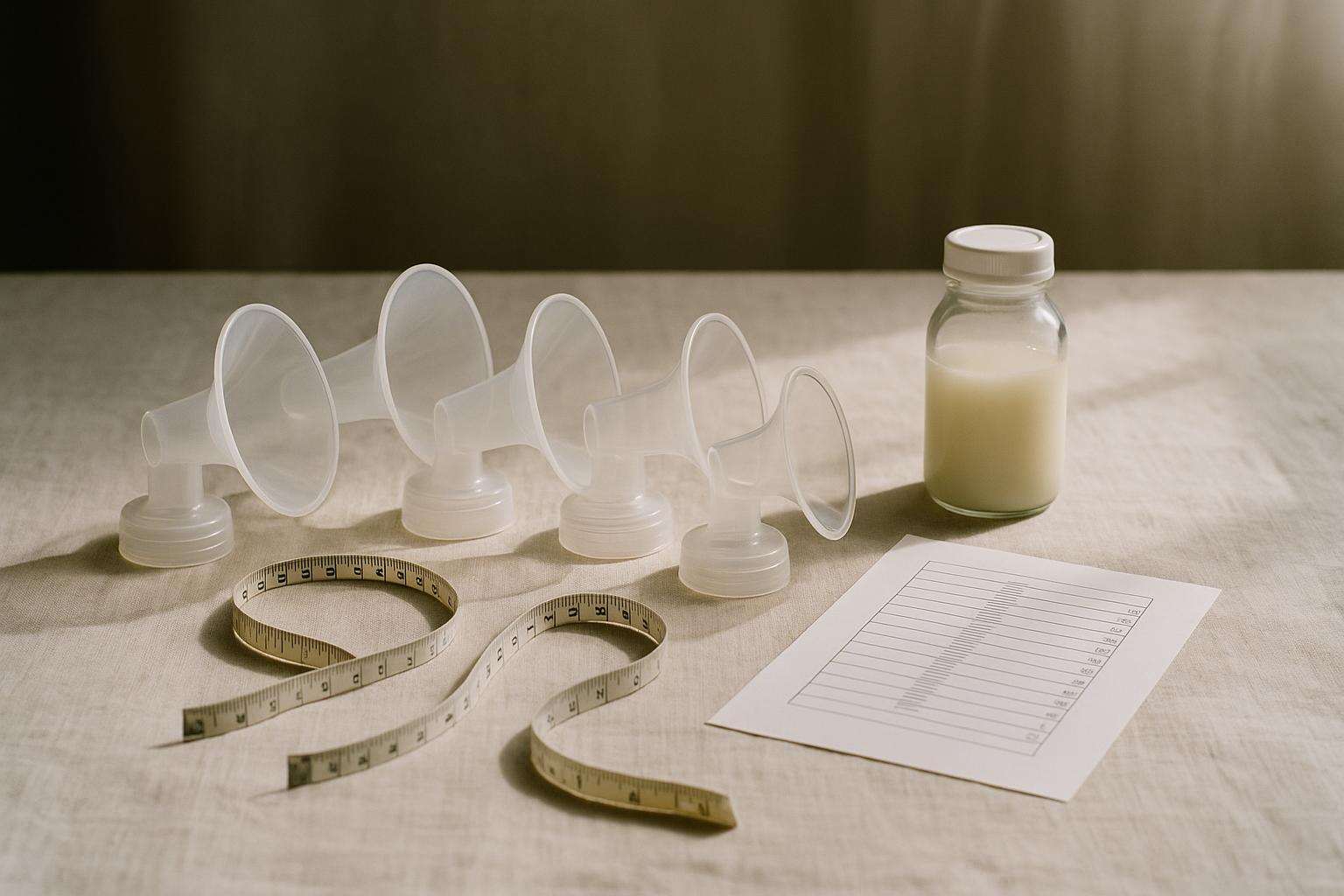
The 24 mm and 28 mm flanges packaged with most pumps fit a narrow slice of nipple anatomy. Clinical IBCLC data show the most commonly needed sizes run from 13 mm to 21 mm. Measure your nipple tip diameter, trial one size down, and use silicone inserts from Maymom or Nenesupply to reach a correct fit without buying a new pump.
Flange sizing is the single most impactful technical decision you make as a pumping parent — and the one most likely to be made incorrectly, because the default flanges in the box are chosen for inventory efficiency, not individual anatomy. Getting this one detail right can mean the difference between a comfortable, productive pumping session and weeks of pain, low output, and unnecessary frustration.
Why do default pump flanges fit so few people?
The Spectra S1 Plus ships with 24 mm and 28 mm flanges. Medela's current models include a 21 mm and 24 mm shield. These sizes represent the statistical middle of nipple anatomy as estimated by manufacturers — not the clinical reality that IBCLCs observe daily in practice.
A 2025 peer-reviewed pilot study published in the Journal of Human Lactation by IBCLC Jeanette Mesite Frem, Lisa A. Anders, and Thomas P. McCoy — the study that validated the Flange FITS method — found that in clinical populations, the most commonly needed flange sizes range from 13 mm to 21 mm, substantially below the packaged defaults. Many pumping parents are using a flange one to two sizes too large without knowing it.
The consequences of a poor fit are not minor. A flange that is too large draws areola tissue into the nipple tunnel alongside the nipple, reducing suction efficiency and causing bruising or soreness at the areola base. A flange that is too small creates friction against the nipple shaft — the nipple rubs the tunnel walls with every cycle, causing blistering and a characteristic white compression ring at the tip. In either case, the pump's suction is not translating into effective milk removal.
Observational data from Aeroflow Breastpumps found that 82.9% of pumping mothers rate suction strength as the most important factor in pump selection — but optimal suction settings are irrelevant if the flange geometry is wrong. Fit is upstream of everything else.
How do you measure for the right flange size?
The measuring process takes about two minutes and requires only a millimeter measuring tape or a printed ruler. Here is the standard IBCLC-recommended method:
- Time it correctly. Measure after a warm shower when nipple tissue is relaxed — not immediately after a feeding or pumping session when the nipple may be compressed or temporarily enlarged.
- Measure nipple tip diameter only. Place the tape across the widest point of the nipple itself, not the areola. The areola is not part of this measurement. Record the diameter in millimeters.
- Apply the Flange FITS starting point. The Flange FITS method, developed by Jeanette Mesite Frem and validated in the 2025 Journal of Human Lactation study, begins at the measured nipple diameter and tests one size smaller and one size larger to find peak comfort and output. Your measured size is a starting point, not a final answer.
- Assess the fit during a session. During a pumping session, the nipple should move freely in and out of the tunnel without touching the sides. Minimal surrounding areola — ideally less than a few millimeters — should be drawn in. You should feel rhythmic pulling but no friction, pinching, or burning.
After removing the flange, your nipple should look the same as it did before pumping — no white rings, no redness at the shaft, no bruising at the areola edge. Any of those marks is a reliable sign that the size needs adjustment.
If self-measurement is unclear, an IBCLC lactation consultation includes a hands-on flange fitting assessment. These visits are covered by most major insurance plans — including Aetna, Cigna, UnitedHealthcare, and Anthem — as a preventive lactation benefit under the Affordable Care Act, so there is typically no out-of-pocket cost. The Lactation Loop IBCLC guide also provides a printable self-measurement template.
What are silicone flange inserts, and when should you use them?
Silicone inserts are soft inserts that slide inside a standard 24 mm flange and reduce the effective tunnel diameter. Maymom and Nenesupply are the two most established brands in this category; both offer inserts that reduce the tunnel opening to sizes from 13 mm to 21 mm. They are widely available for approximately $10–$20 per set — a fraction of the cost of a full pump replacement or upgrade.
Inserts work because they borrow the structural body of the standard flange while providing a smaller, softer nipple tunnel. The medical-grade silicone material is also gentler against the nipple than the firmer polypropylene of most OEM flanges, which many users find adds a meaningful comfort benefit independent of the size change.
Most Maymom and Nenesupply inserts are compatible with Spectra and Medela pump bodies; confirm the compatibility chart for your specific pump before ordering. For wearable pumps like the Elvie Stride or Willow Go, check the manufacturer's guidance on insert compatibility, as some cup geometries differ from traditional flange designs.
Inserts do wear out. Replace them at the first sign of tearing, discoloration, or reduced suction — worn silicone pump parts are among the most common causes of sudden output decline. The general guidance for pump valves and membranes (replacement every two to four weeks under daily use) applies to inserts as well under comparable use conditions.
A note on flange size and wearable pumps
Flange fit matters even more with wearable pumps than with traditional bench-style pumps, for a simple reason: you cannot observe the nipple movement inside a wearable cup while it is tucked in your bra. With a traditional pump, you can glance down and immediately see whether areola is being drawn in or the nipple is rubbing the walls. With the Elvie Stride or Willow Go, that visual feedback is gone.
A controlled study found no statistically significant difference in breast emptying or total milk volume between wearable and traditional pumps when flange fit was correct. But the same research noted that 10–50% output reductions were reported by some wearable-pump users outside clinical conditions — with poor flange fit identified as the primary cause. If your wearable pump seems to underperform relative to your traditional pump, flange sizing is the first variable to reassess, not suction settings or pump model.
Most lactation professionals recommend establishing correct flange size using a traditional double-electric pump in the first four to six weeks postpartum — when you can observe the fit and have IBCLC support readily available — before adding a wearable pump for daytime mobility. Confirming fit in a visible, adjustable setting first removes a significant source of uncertainty when you transition to pumping hands-free.
This article provides general educational information about breast pump flange sizing. It is not a substitute for individualized medical or lactation advice. If you are experiencing pain while pumping, unexpectedly low output, or any concerns about milk supply, please consult a certified lactation consultant (IBCLC) or your obstetric provider.
Frequently asked
How do I measure my nipple for the correct pump flange size?
Measure the diameter of your nipple tip — not the areola — using a soft millimeter measuring tape or a printable ruler. Do this when your nipple is neither compressed nor fully erect, ideally after a warm shower when tissue is relaxed. The number you get is your starting point, not your final flange size. The Flange FITS method, developed by IBCLC Jeanette Mesite Frem and validated in a 2025 pilot study in the Journal of Human Lactation, recommends beginning at the measured diameter and trialing one size smaller and one size larger to find peak comfort and milk yield. Your nipple should move freely through the tunnel without rubbing the walls, and very little surrounding areola tissue should be pulled in during a pumping session. This is general information — an IBCLC can provide a hands-on assessment tailored to your anatomy.
What is the most common flange size, and is 24 mm right for most people?
The 24 mm flange that ships with the Spectra S1 and many other pumps is not the most common size in clinical practice — it is simply the manufacturer's middle-tier default. According to IBCLC clinical data cited in the Lactation Loop IBCLC guide, the sizes most commonly needed in real populations range from 13 mm to 21 mm, which is meaningfully smaller than the 24–28 mm shields included in most boxes. Many pumping parents are using flanges one or two sizes too large without realizing it, which can cause the areola to be drawn into the tunnel, reduce suction efficiency, and create discomfort that is easy to mistake for an unavoidable pumping side effect. Smaller sizes are readily available as aftermarket parts and silicone inserts.
What are the signs that my flange is the wrong size?
A flange that is too large typically causes areola tissue to be pulled rhythmically into the tunnel, visible as a ring of areola skin being sucked in alongside the nipple. You may also notice redness or bruising at the base of the nipple, lower-than-expected milk output for a full pumping session, and a sense that the pump is working but not emptying the breast. A flange that is too small restricts nipple movement and causes friction — the nipple rubs against the tunnel wall, creating soreness, blistering, or a white circle at the nipple tip after pumping. Neither pain nor a feeling of friction is normal. A well-fitted flange allows the nipple to move freely without touching the sides, with minimal areola drawn in, and should feel like comfortable pulling rather than pinching or scraping. If you are experiencing persistent pain or unexpectedly low output, consult an IBCLC for a professional flange assessment — most major insurance plans cover this visit.
Do silicone flange inserts actually work, and which brands are reliable?
Yes — silicone flange inserts are an effective and affordable solution for parents whose nipple diameter is smaller than the flanges included with their pump. Inserts from Maymom and Nenesupply are the two most widely used aftermarket options; they slip inside a standard 24 mm flange and reduce the effective tunnel diameter to sizes ranging from 13 mm to 21 mm. This allows you to keep your existing pump hardware while achieving a custom-fit nipple tunnel. Both brands are available on major retail platforms for approximately $10–$20 per set — a fraction of the cost of a full replacement flange kit. The inserts are made from soft silicone, which tends to be more comfortable against the nipple than the firmer polypropylene of standard flanges. They are compatible with Spectra, Medela, and many other major pump brands, though it is worth confirming compatibility before purchasing. Replace inserts when you notice any tearing, discoloration, or reduced suction transfer, as worn pump parts are the most common cause of sudden suction loss.
Can the wrong flange size reduce my milk supply?
An ill-fitting flange can meaningfully affect milk output in the short term and, if uncorrected over weeks, can contribute to supply reduction. The mechanism is straightforward: when the flange does not create an efficient seal and nipple-movement cycle, the pump's suction is not effectively translated into milk ejection. Observational data from the breast pump field, including surveys by Aeroflow Breastpumps, show that 82.9% of pumping mothers rate suction strength as the most important factor in pump selection — but suction strength is irrelevant if the flange geometry prevents that suction from working correctly. Wearable pump users are particularly susceptible because small fit errors are harder to detect visually while the cup is inside a bra. A well-fitted flange will not guarantee a specific volume, but it removes one of the most correctable mechanical barriers to efficient milk removal. This is general information — for persistent supply concerns, consult a lactation consultant or your obstetric provider.
Does my flange size need to change as breastfeeding progresses?
Yes — nipple diameter can change during the postpartum period, particularly in the first few weeks as engorgement resolves and breast tissue adapts to regular milk removal. Most IBCLCs recommend reassessing flange fit at the initial postpartum IBCLC visit (ideally within the first one to two weeks), and again around six to eight weeks when supply typically stabilizes. Long-term pumping parents — especially those exclusively pumping for six months or more — often find that nipple size shifts gradually and may need to revisit sizing every few months. The fit assessment is quick and non-invasive, and IBCLC visits are covered by most major insurers including Aetna, Cigna, UnitedHealthcare, and Anthem as a lactation support benefit. Lactation Loop's IBCLC guide provides a printable self-measurement tool you can use between visits to spot changes between appointments.