Baby Gear
Pregnancy Pillows Explained: C-Shape, U-Shape and How to Choose
A physical therapist's guide to pregnancy pillow shapes, support trade-offs, and when to start using one — grounded in sleep-positioning science and real product data.
Clinically reviewed · June 2026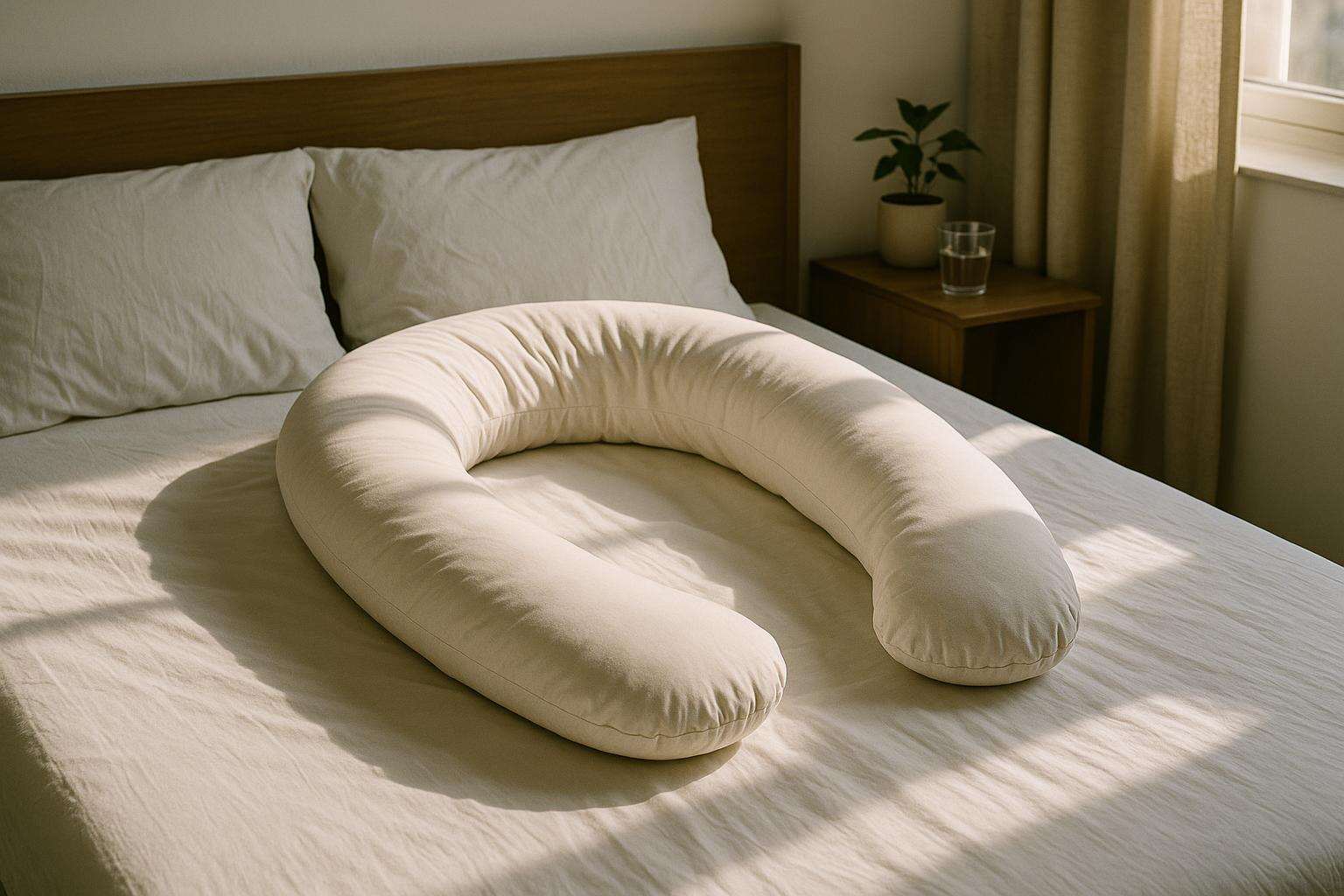
A C-shape pillow supports head, belly, and hips on one side; a U-shape wraps front and back simultaneously. Most pregnant women benefit from starting around 20 weeks. After 28 weeks, any pillow that keeps you on your left side and a second pillow between your knees addresses the most clinically relevant positioning goals.
Pregnancy pillows fill an entire aisle of the baby-gear market, and most look more similar than they are. Shape determines where support is delivered; fill determines firmness and heat retention; cover determines how often you will actually wash it. Getting those three factors right matters because sleep quality in the third trimester directly affects everything else — pain tolerance, mood, blood pressure, and how you will feel heading into labor.
As a pelvic-floor physical therapist who works with pregnant patients through all three trimesters, I find that most women buy a pillow too late and then choose the wrong shape for their primary complaint. This guide is meant to help you avoid both mistakes.
Why does sleep positioning actually matter in pregnancy — and when does it become critical?
The physiology here is straightforward. From around 28 weeks onward, the uterus is large enough that lying flat on your back allows it to compress the inferior vena cava — the large vein returning deoxygenated blood from the lower body to the heart. When that vein is compressed, cardiac output drops, and so does uteroplacental blood flow. ACOG and the National Guideline Alliance for the Royal College of Obstetricians and Gynaecologists both advise pregnant women to avoid sustained supine sleeping after 28 weeks for this reason.
Left-lateral (left-side) sleeping is specifically preferred because it maximally unloads the vena cava and has been associated in some observational studies with reduced risk of third-trimester stillbirth — though causality is not firmly established. The practical problem is that most people roll unconsciously during the night. A pregnancy pillow positioned behind your back acts as a physical barrier to rolling supine without forcing you into an uncomfortable locked position.
Beyond the vascular concern, relaxin — the hormone responsible for loosening ligaments and joints in preparation for birth — affects the sacroiliac joints and hip capsules well before delivery. Without a pillow between the knees, side sleeping tends to drop the top knee forward and internally rotate the hip, loading the already-lax SI joint. Placing a pillow between your knees keeps both hips in a neutral, parallel plane. This simple positioning change is one of the most effective non-pharmacological interventions for pregnancy-related pelvic girdle pain.
The case for starting early — around 20 weeks, when the belly begins creating a gap between waist and mattress — is that you want your body adapted to the new sleep surface before discomfort peaks in weeks 32–36.
What are the real differences between C-shape, U-shape, and wedge pillows?
The three main configurations serve different clinical purposes, and the decision matrix is simpler than the product listings make it seem.
| Shape | Support coverage | Bed space required | Best for | Primary trade-off |
|---|---|---|---|---|
| C-shape (e.g., Leachco Snoogle) | Head, neck, belly, hips — one side only | Moderate (60" × ~25") | Predominantly one-side sleepers; structured support seekers; smaller beds | Open back; must reposition pillow to switch sides |
| U-shape (e.g., PharMeDoc U-shape) | Head, belly, and back simultaneously | Large (53" × 31") | Restless sleepers who roll; those with significant back pain | Occupies substantial bed space; polyester fill retains heat |
| Wedge / half-moon | Targeted — belly, back, or under knees only | Minimal | Supplementing existing pillows; travel; later postpartum nursing support | Addresses only one support zone at a time |
C-shape pillows are the most widely reviewed category. The Leachco Snoogle — originally designed by a registered nurse — measures 60 inches long and approximately 24.75 inches wide, with 100% polyester fiber fill inside a removable, machine-washable 65/35 polyester-cotton shell. It comes in four fabric grades: Standard, Supreme (300-thread-count cotton), Chic (cotton-polyester blend), and Jersey. Reviewers consistently describe its feel as firm and structural rather than plush — it holds position rather than conforming around you. The Snoogle holds the number-one rank in Amazon's body pillow category and earns consistent top marks from The Bump's tested roundup. The honest drawbacks: it occupies meaningful bed space and re-inserting the pillow into its form-fitted zippered cover after washing requires patience.
U-shape pillows solve the rolling problem by wrapping both sides. PharMeDoc — a brand founded in 2013 — offers both C-shape (approximately 57–62 inches long, 30 inches wide) and U-shape (53 inches long, 31 inches wide) configurations, both with polyester fiberfill and a removable jersey cover. Independent laboratory testing by BabyGearLab gave the PharMeDoc U-shape a Versatility score of 6.0 and a Comfort score of 4.0 — flagging a slippery cover surface, heat retention in the polyester fill, and a spot-clean-only interior that creates re-zipping difficulty. The U-shape lists for approximately $45. PharMeDoc's C-shape, which has a zippered machine-washable cover, received better ease-of-use ratings.
The Boppy Total Body (48 × 25 inches, 80% polyester/20% cotton fill, 100% rayon cover) earned the highest Ease-of-Cleaning score — 10.0 from BabyGearLab — because both pillow and cover are fully machine-washable. However, its Comfort score (3.0) and Versatility score (3.0) were the lowest in BabyGearLab's tested cohort, with testers noting uneven fill distribution: overstuffed ends and a flat middle that failed to adequately support the belly. At approximately $55, it is a better laundry story than support story. For women specifically prioritizing side-sleeping support within the Boppy line, the Boppy Full Body Side Sleeper Pillow — which has machine-washable inserts and a Best of The Bump award — is the better-rated alternative.
Should I be concerned about the materials in a pregnancy pillow?
The short answer is: be label-aware, but don't let concern push you toward no pillow at all. The material worth scrutinizing is not the polyester fill itself — it is the chemical finishing and flame-retardant treatment on the cover and batting.
Many upholstered products have historically used brominated flame retardants (PBDEs), which are persistent organic pollutants. Research published on NIH PubMed Central documents that these compounds cross the placental barrier and have been associated with neurodevelopmental impairment in offspring. The same principle applies when you are choosing a crib mattress, bouncer seat, or car seat insert: chemical exposure during this window matters.
The practical filter is certification. Look for products carrying GREENGUARD Gold certification or OEKO-TEX Standard 100 certification, both of which require independent third-party testing against a restricted-substances list that includes phthalates and flame retardants. If a pillow has a strong chemical smell at unboxing, air it out thoroughly before use. Women who prefer natural fill — organic cotton or wool — will find fewer mass-market options, but specialty and natural-parenting brands do carry them. As always, discuss any specific product concerns with your obstetric provider.
A pregnancy pillow between your knees is not optional comfort — it is active injury prevention. Relaxin loosens the sacroiliac joint months before delivery. Side sleeping with the top knee dropped forward without support progressively loads that already-lax joint every night. Two minutes of positioning correctly before sleep pays dividends in the home stretch.
How do I manage swelling, and can my pregnancy pillow help?
Leg and ankle edema affects the majority of pregnant women in the second and third trimesters. During pregnancy, total blood and fluid volume increases by approximately 50%, and the growing uterus compresses pelvic veins — both mechanisms drive dependent edema in the lower extremities.
A pregnancy pillow contributes to edema management through leg elevation during sleep. Raising both legs slightly above heart level while sleeping reduces venous pressure and overnight fluid accumulation in the ankles and calves. The curved end of a C-shape pillow can be positioned under the ankles for this purpose; a separate wedge pillow under the calves works equally well.
A complete edema management approach, per Mayo Clinic guidance, includes:
- Left-side sleeping with legs elevated
- Graduated compression stockings worn during waking hours
- Adequate hydration — counterintuitively, increasing water intake can help the kidneys release retained fluid
- A potassium-rich diet (sweet potatoes, leafy greens, avocado, bananas) to support healthy sodium balance
- Avoiding tight-banded clothing around the calves or ankles
When to call your provider immediately: sudden or asymmetric swelling — especially if accompanied by headache, visual disturbances, or pain in the right upper abdomen — warrants immediate evaluation for preeclampsia. This is one area where positioning and lifestyle measures are supportive, not sufficient.
This article is general educational information, not medical advice. Please speak with your obstetric provider or physical therapist about positioning, pain, and sleep concerns specific to your pregnancy.
Frequently asked
When should I start using a pregnancy pillow?
Most pregnant women find a pregnancy pillow genuinely useful from around 20 weeks onward, when the belly becomes large enough to create a noticeable gap between the waist and the mattress during side sleeping. However, there is no minimum gestational age — if back or hip discomfort appears earlier, using one sooner is perfectly reasonable.
The clinical rationale for side sleeping becomes especially important after 28 weeks, when Mayo Clinic and ACOG advise avoiding sustained supine (back) sleeping due to inferior vena cava compression. A pregnancy pillow positioned behind your back acts as a physical cue and barrier to rolling supine during the night, making it a practical aid for maintaining left-lateral positioning through the third trimester. Starting before you are uncomfortable — at around 20 weeks — gives you time to find the right shape and adjust before the third trimester begins.
What is the difference between a C-shape and U-shape pregnancy pillow?
The core functional difference is front-and-back simultaneous support. A C-shape pillow (such as the Leachco Snoogle) curves around one side of your body — head, neck, belly, and hips — in a single loop, with an open back. It replaces multiple standard pillows and works particularly well for women who sleep predominantly on one side. The Snoogle is approximately 60 inches long and provides firm, structured support that reviewers consistently distinguish from simple cushioning.
A U-shape pillow (such as the PharMeDoc U-shape) wraps around both the front and back simultaneously, so you have something to hug on one side and back support on the other without repositioning the pillow when you roll over. The trade-off is size: U-shape pillows occupy substantially more bed space — typically 53 inches long by 31 inches wide — which can be problematic in full or queen beds shared with a partner. BabyGearLab testing found PharMeDoc's U-shape scored 6.0 on Versatility but only 4.0 on Comfort, with a noted heat-retention issue from polyester fill.
Why does left-side sleeping matter during pregnancy?
After 28 weeks, the uterus is large enough that lying flat on your back allows it to compress the inferior vena cava — the major vein that returns blood from your lower body to your heart. This reduces cardiac output and, in turn, uteroplacental blood flow. ACOG and the Royal College of Obstetricians and Gynaecologists both advise avoiding sustained supine sleeping from 28 weeks onward for this reason.
Left-lateral (left-side) sleeping is specifically recommended because it maximizes venous return and has been associated in observational research with reduced third-trimester stillbirth risk, though causality is not firmly established. Placing a pregnancy pillow behind your back creates a gentle physical barrier that prevents rolling supine without forcing you into a rigid position. Positioning a pillow between your knees simultaneously keeps your hips in neutral, parallel alignment — reducing pressure on the sacroiliac joints and hip capsules that have been loosened by relaxin. See Mayo Clinic's guidance on pregnancy sleep positioning for more.
Is the Leachco Snoogle actually worth it?
For most women who prioritize structured support over pure softness, the Snoogle is a well-supported choice. It holds the number-one position in Amazon's body pillow category and is consistently top-ranked by independent reviewers including The Bump, which tested it with real pregnant users. Its 100% polyester fiber fill and 65% polyester/35% cotton removable shell provide firmer resistance than many competitors — more akin to structural positioning than plush cushioning.
The genuine drawbacks are its bed footprint (it occupies significant space and is less suitable for anything smaller than a queen bed) and the difficulty of re-inserting the pillow into its form-fitted zippered cover after machine washing. The Snoogle comes in four fabric grades — Standard, Supreme 300-thread-count cotton, Chic cotton-polyester blend, and Jersey — and the Signature variant is sold exclusively at Target. Whether it is worth the cost depends on whether firm positional support matters more to you than ease of laundering.
What should I look for in pregnancy pillow materials — is polyester fill safe?
Most mainstream pregnancy pillows use polyester fiber fill, which is generally considered safe for everyday use. The more meaningful material concern in the third trimester is off-gassing and flame-retardant chemicals: many upholstered and foam products historically used brominated flame retardants (PBDEs), which are persistent organic pollutants that cross the placental barrier and have been associated with neurodevelopmental impairment in offspring, per research published on NIH PubMed Central.
When choosing a pregnancy pillow, look for GREENGUARD Gold certification or OEKO-TEX Standard 100 certification, both of which require independent testing against a restricted-substances list. Avoid products with a strong chemical smell at unboxing. Women who prefer natural fill options — organic cotton, wool — will find fewer mainstream choices, but specialty brands do offer them. This is general information; speak with your provider about any specific product concerns.
Can a pregnancy pillow help with swelling in my legs and ankles?
A pregnancy pillow can contribute — but is most effective as part of a broader positioning strategy rather than a standalone swelling remedy. During pregnancy, total blood and fluid volume increases by approximately 50%, and the growing uterus compresses pelvic veins, producing dependent edema in the lower extremities. Elevating both legs slightly above heart level during sleep — using a pillow, wedge, or the curved end of a C-shape pillow positioned under your ankles — reduces venous pressure and can meaningfully decrease overnight swelling.
Complementary measures supported by Mayo Clinic include sleeping on your left side, wearing graduated compression stockings during waking hours, staying adequately hydrated, and a potassium-rich diet (sweet potatoes, leafy greens, avocado) to support healthy sodium balance. Sudden or asymmetric swelling — especially with headache, visual changes, or upper abdominal pain — warrants immediate evaluation for preeclampsia. This is general information, not medical advice; always discuss new symptoms with your provider.